
Introduction
In the current AI cycle, a new pattern is becoming clear: users want systems that do more than generate text. They want AI that can open software, move data, use browsers, trigger workflows, and complete multi-step tasks with limited supervision. That shift is why "AI claws" have become part of the tech conversation.
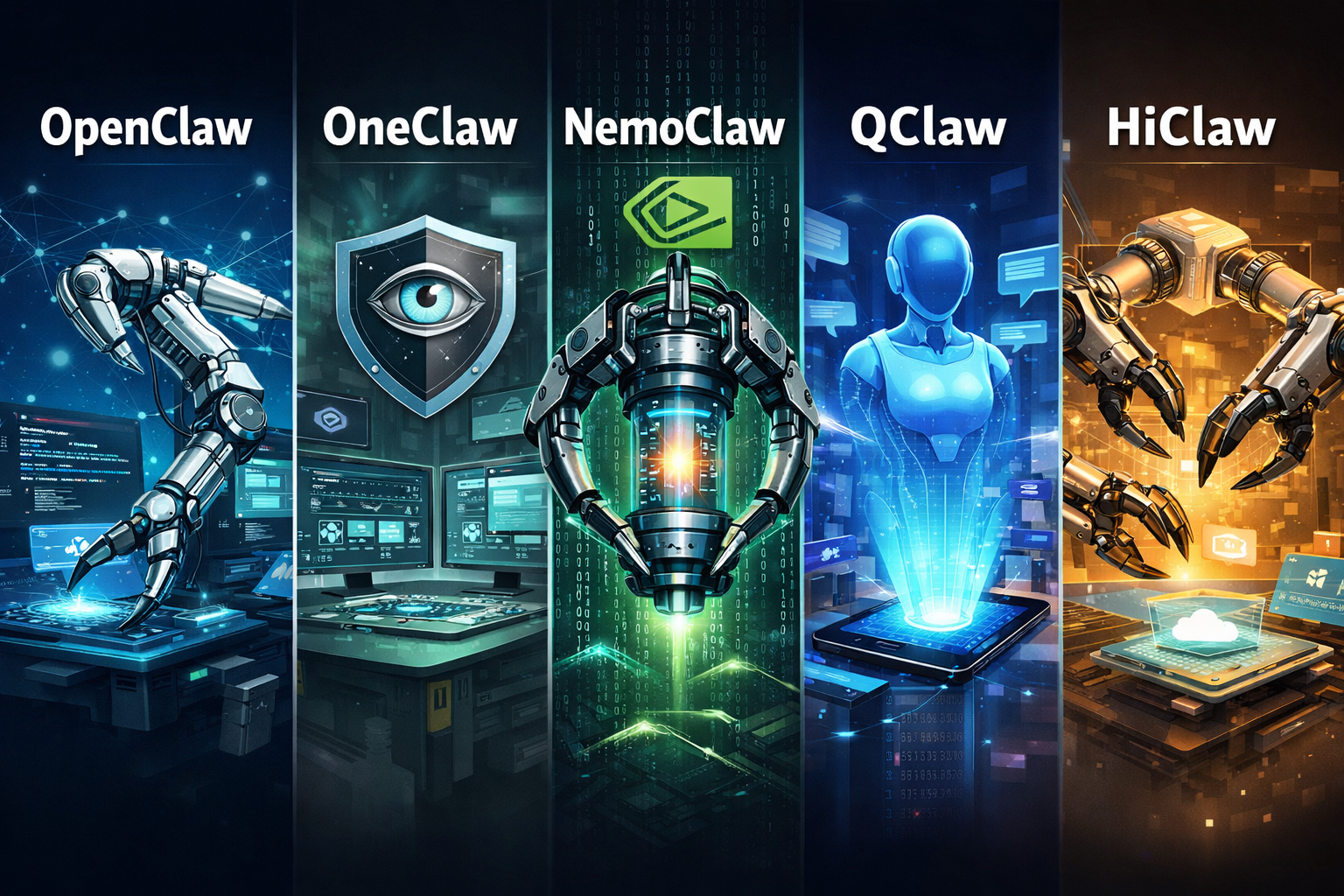
The term is being used around OpenClaw, a fast-rising open-source AI agent platform, and OneClaw, a newer governance and visibility layer built for organizations trying to understand where those agents are running and what they are doing.
The real story is not just one product. It is the transition from AI assistants that answer, to AI agents that act.
What does "AI claw" mean?
"AI claw" is an informal label for a class of agentic AI tools that can grab onto systems and perform actions across them. Instead of waiting for a user to ask one question at a time, these tools are designed to chain steps together.
Beyond chat
They move from one-shot answers to task execution and automation.
Tool use
They can connect with browsers, files, apps, APIs, and workflows.
Persistent context
Many aim to maintain memory, sessions, and reusable skills.
Autonomy
They can handle multi-step goals with less constant user input.
OpenClaw: why it is suddenly everywhere
OpenClaw is the name most closely associated with the recent agent wave. It is positioned as a personal AI assistant with a broad tool layer, companion apps, browser and workflow capabilities, and a setup model intended to make agent behavior more practical for everyday users and developers.
Why it is trending
- It brings agent behavior into a more usable package for non-research users.
- It is open source, which accelerates experimentation, forks, plugins, and community adoption.
- It fits the moment: the market is moving from AI content generation toward AI task execution.
- It has become culturally viral, not just technically popular.
What it can do
- Use tools across web, files, communication apps, and workflows.
- Support ongoing sessions and structured automation.
- Extend with skills, plugins, or connected services.
- Serve as a foundation for more customized AI assistants.
In recent coverage, OpenClaw has been described as one of the clearest signals that agentic AI is moving from demos into wider public usage.
OneClaw: the governance layer for the agent era
If OpenClaw represents the excitement side of the story, OneClaw represents the control side. OneClaw, launched by Prompt Security from SentinelOne, focuses on discovery and observability for organizations dealing with hidden or unmanaged AI agent deployments.
That matters because once AI agents can browse, connect apps, read files, or execute workflows, companies need to answer basic governance questions quickly: where are agents running, who deployed them, what tools are they touching, and what risk do they create?
Discovery
Helps organizations identify agent usage that may be happening outside formal approval paths.
Observability
Adds visibility into how AI agents behave across the environment.
Governance
Supports executive and security teams that need oversight without blocking innovation.
Agent sprawl control
Useful when experimental AI setups start spreading faster than policy can keep up.
Why other AI claws are now in the news too
OpenClaw's momentum has triggered a broader wave of AI agent products, forks, wrappers, and enterprise platforms. News coverage in March 2026 shows major companies racing to launch their own agent offerings or OpenClaw-adjacent platforms.
What is happening now
- Baidu has launched a suite of AI agents based on the OpenClaw framework.
- Alibaba has introduced an enterprise agent platform as the market shifts toward multi-agent business automation.
- NVIDIA has announced NemoClaw, aimed at helping users run OpenClaw-style agents more securely.
- Security vendors and analysts are now treating agent observability as a core requirement rather than a niche concern.
This is why the story is bigger than one repo. "AI claw" is becoming shorthand for a new software category: agents that sit above apps and coordinate actions across them.
Why this trend matters
1. AI is moving from output to action
The next battleground is not who writes the best paragraph, but who completes the best workflow.
2. Interfaces are changing
Users may rely less on app-by-app navigation and more on instruction-driven automation.
3. Enterprise risk is rising
More autonomy means more chance of data leakage, permission misuse, or unintended execution.
4. Open ecosystems grow fast
Open-source agent frameworks spread quickly because developers can adapt them to many industries.
OpenClaw vs OneClaw vs the broader claw ecosystem
| Category | OpenClaw | OneClaw | Other AI Claws / Agent Platforms |
|---|---|---|---|
| Primary role | Open-source AI agent framework and assistant layer | Discovery and observability for AI agent usage | Commercial or enterprise agent products built for specific use cases |
| Main appeal | Flexibility, extensibility, community momentum | Governance, security visibility, executive oversight | Packaging, enterprise workflow integration, simplified deployment |
| Audience | Developers, tinkerers, early adopters, product builders | Security teams, IT leaders, compliance-minded organizations | Enterprises, platform vendors, AI product teams |
| Big question | What can the agent do? | Where is the agent, and what is it doing? | How do we commercialize or operationalize agent behavior? |
Risks and concerns
The excitement around AI claws is real, but so are the risks. Recent reporting highlights a recurring tension: the more useful an agent becomes, the more permissions and reach it usually needs.
- Security: agents with access to browsers, files, email, chat, and APIs create new attack surfaces.
- Data leakage: broad permissions can expose sensitive corporate or personal information.
- Unpredictable execution: a multi-step agent can take a surprising path if instructions or tools are poorly constrained.
- Shadow AI: organizations may not realize how widely these agents are being installed and used.
That combination explains why OpenClaw is getting both enthusiastic adoption and strong security scrutiny at the same time.
Final take
OneClaw and OpenClaw are important for different reasons. OpenClaw shows where user demand is heading: toward AI that can act. OneClaw shows what the next enterprise requirement looks like: visibility and control over those actions.
The broader "AI claw" moment is really the arrival of mainstream agentic software. The winners in this space will not just be the smartest models. They will be the platforms that balance usefulness, trust, security, and operational control.
The future of AI is not just conversation. It is coordination, execution, and governed autonomy.
Sources
- OpenClaw GitHub repository
- Reuters: Baidu joins China's OpenClaw frenzy with new AI agents
- Reuters: Alibaba launches new AI agent platform for enterprises
- NVIDIA: NemoClaw for the OpenClaw community
- SentinelOne: OneClaw discovery and observability for the agentic era
- Financial Times: The AI craze that has its claws into China